Artificial Intelligence (AI) is no longer a futuristic dream-it is here, shaping the way we live, work, and make decisions every single day. Yet, amid all the excitement and breakthroughs, a fundamental question emerges:
Are we building AI that uplifts all of humanity or just a privileged few?
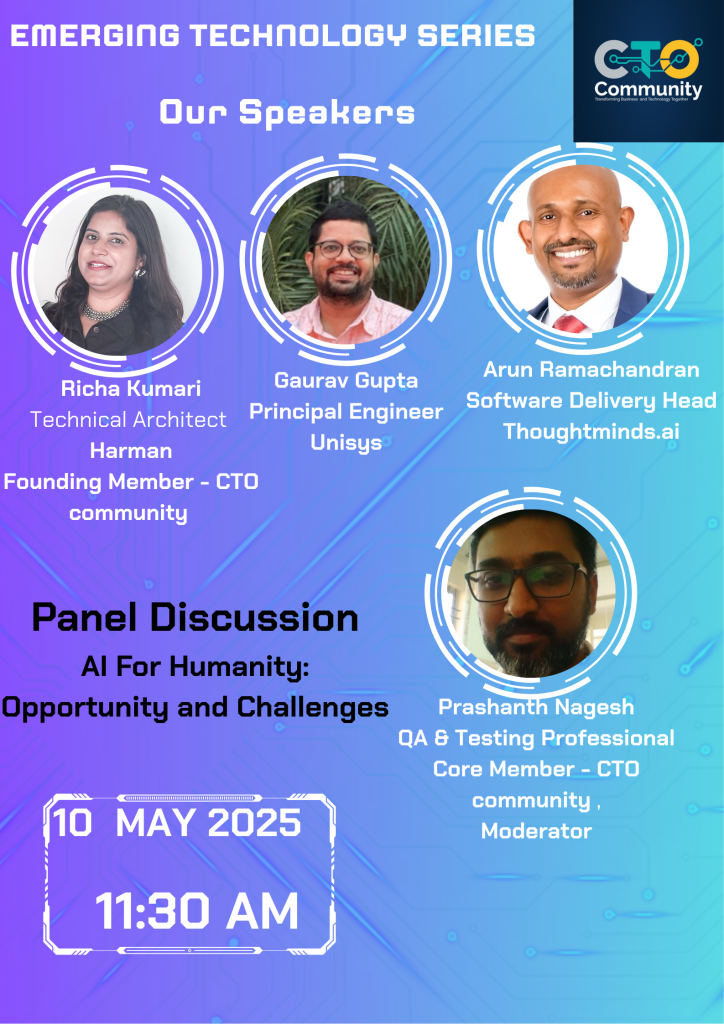
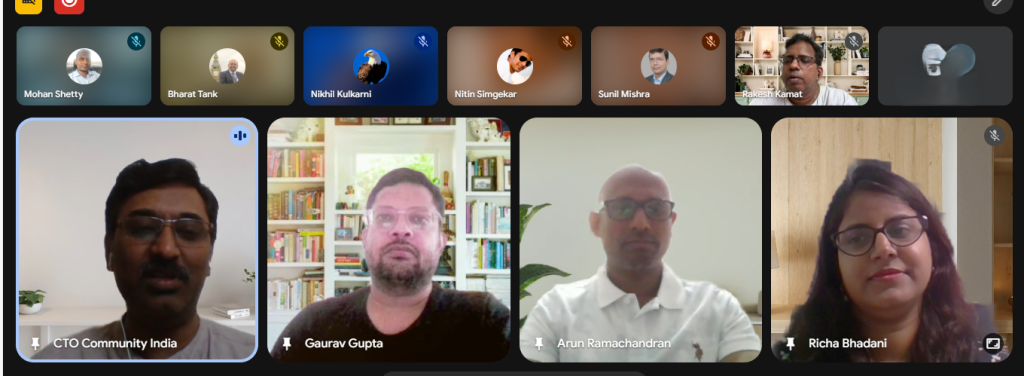
This was the central theme of a recent CTO Community India conversation that brought together leaders, innovators, and thinkers to examine AI through the lens of humanity and responsibility. The discussion went beyond technology touching education, healthcare, sustainability, governance, ethics, and jobs.
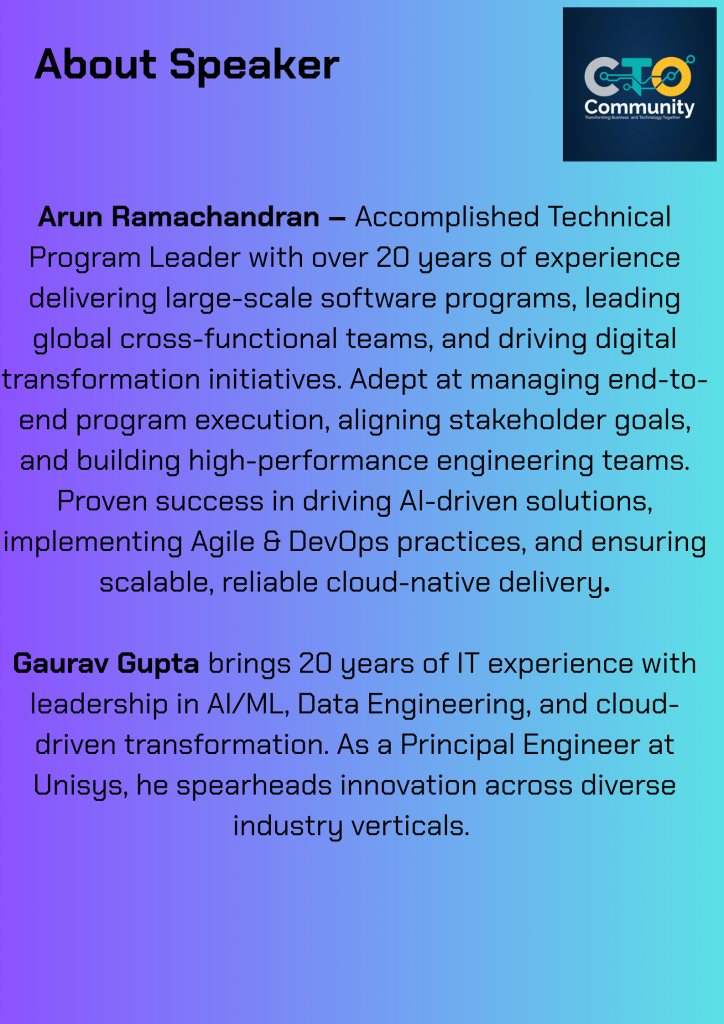
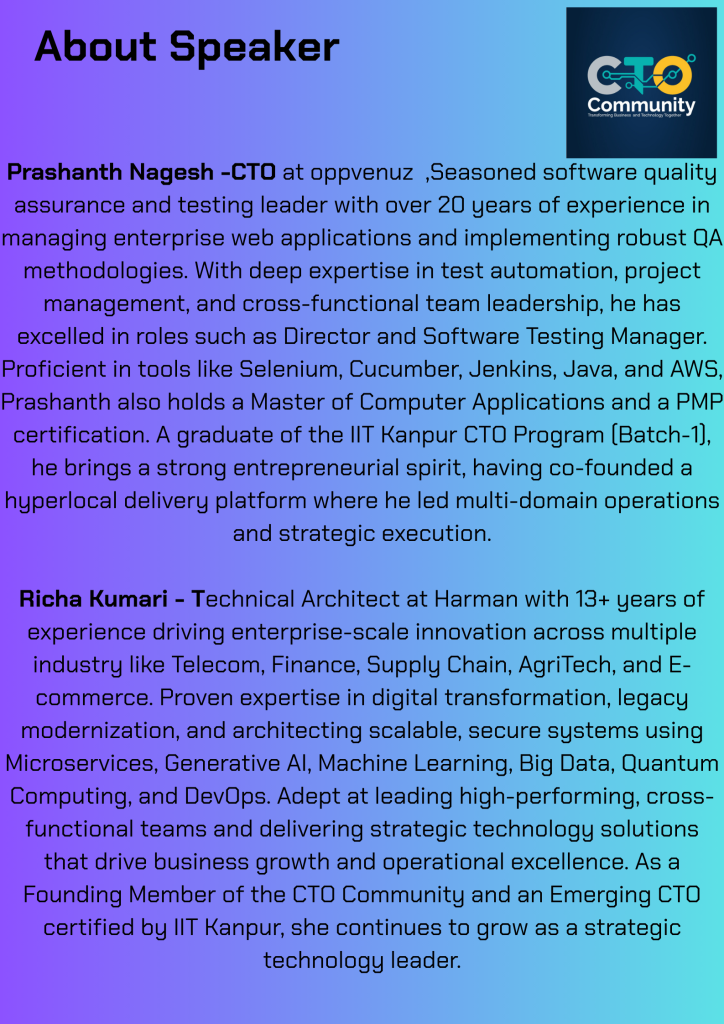
The session, moderated by Prashanth Nagesh, featured powerful insights from panelists Gaurav Gupta, Arun Ramachandran, and Richa Kumari. What unfolded was not just a debate on technology, but a call to action for leadership in an AI-driven world.
1. AI in Education: The Great Equalizer
Can AI truly personalize learning and reach rural and neurodiverse learners?
The panel explored how adaptive learning platforms, voice-enabled tools, and low-bandwidth solutions are breaking barriers in education. For rural learners, regional language content powered by AI is bridging the gap. For differently abled students, AI tutors and speech recognition are opening new doors.
Takeaway: AI can be the great equalizer in education ,if inclusion is built into its foundation.
2. Healthcare: Where Precision Meets Empathy
AI is rapidly transforming healthcare with early diagnostics, predictive analytics, and wearable devices. But one question remains—can we balance precision with empathy?
The consensus: AI should augment, not replace, medical professionals. While algorithms can scan millions of data points, compassion, empathy, and human care remain irreplaceable.
Takeaway: AI is reshaping access and outcomes in healthcare, but healing still requires a human touch.
3. Bias in AI: The Invisible Challenge
When data carries bias, AI systems amplify it—whether in hiring, lending, or law enforcement.
The discussion stressed the importance of diverse datasets, transparent systems, and human-in-the-loop approaches to ensure fairness. AI must be as accountable as the leaders deploying it.
Takeaway: Ethical AI begins with ethical data—and ends with responsible human oversight.
4. AI for Sustainability: Smarter, Greener Systems
Climate change is a defining challenge of our times. Can AI be part of the solution?
From predicting weather patterns to optimizing agriculture and building energy-efficient grids, AI is proving invaluable. But the cost of training large AI models—both environmental and energy-related—must not be ignored.
Takeaway: AI can accelerate sustainability efforts, but only if it is built sustainably.
5. Jobs and Automation: Threat or Transformation?
Will AI replace human workers—or create new opportunities?
The panelists highlighted how AI is automating repetitive work while simultaneously creating new roles such as AI auditors, prompt engineers, and citizen developers. Low-code and no-code tools are empowering people outside of tech to become creators.
Takeaway: The future isn’t AI vs. humans—it’s AI with humans. Reskilling is the bridge to opportunity.
6. Human Intelligence in the AI Era
What remains uniquely human when machines grow smarter?
Empathy. Ethics. Emotional intelligence. Context. Culture. AI may predict, but it cannot feel. Leaders must cultivate these human qualities alongside technological adoption.
Takeaway: Investing in human leadership is just as critical as advancing technological leadership.
7. Governance: Can Policy Catch Up with AI?
AI innovation is sprinting ahead—but regulation often lags.
The session emphasized the need for explainability, accountability, and traceability in AI systems. For India, a robust AI policy aligned with global standards, supported by public–private partnerships, is crucial.
Takeaway: Innovation without guardrails risks disaster. Governance must keep pace with growth.
🧭 Final Reflection: The AI Future We Choose
This discussion revealed a clear truth: AI has the power to divide or unite us. The outcome depends not on the algorithms themselves, but on the values, vision, and leadership guiding their creation.
Building AI for humanity requires long-term vision, ethical responsibility, and cross-sector collaboration. It calls for leaders who can balance innovation with empathy, profit with purpose, and speed with sustainability.
What Leaders Can Do Today
- Stay informed on responsible AI development.
- Upskill in ethics, human-centered design, and data literacy.
- Join communities shaping technology for good like CTO Community India.
The future of AI is not written in code alone,it is written in leadership.
About Speakers