
In the era of AI chaos, the biggest leadership skill is not building faster models , it is making sense of the signals.”
The AI Impact Summit brought together policymakers, researchers, global tech leaders, startups, and innovators to discuss the future of AI.
But the real value of such events begins after the summit ends – when leaders come together to interpret what these signals actually mean for organizations, architecture, and strategy.
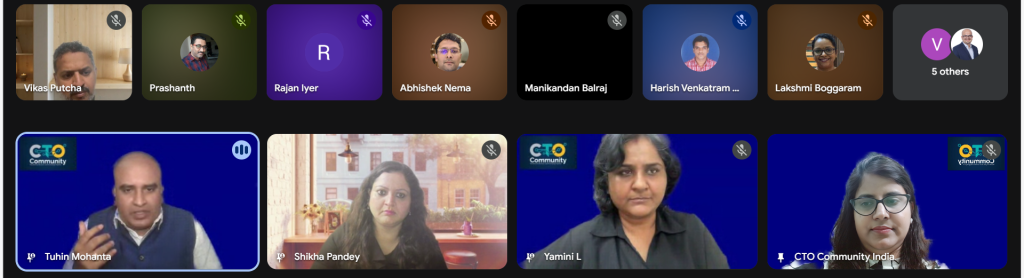
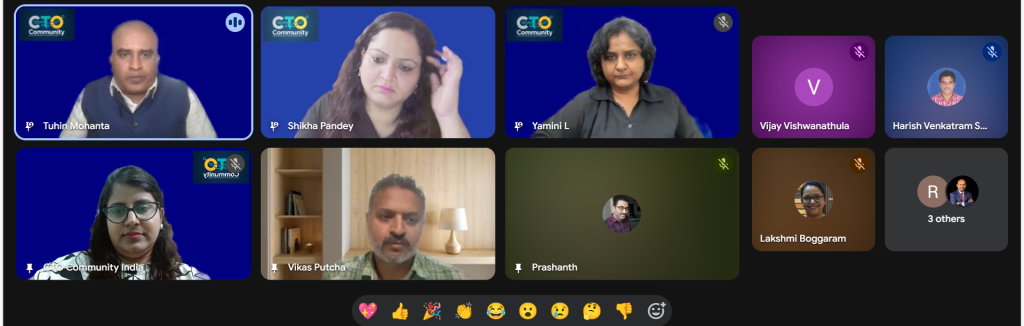
At CTO Community India, we hosted a post-summit discussion to unpack key signals from the India AI Impact Summit, bringing together insights from leaders who attended the summit in person: Tuhin Mohanta, Shikha Pandey, and Yamini L. The session was moderated by Richa Kumari, with thoughtful engagement and perspectives from our CTO Community participants.
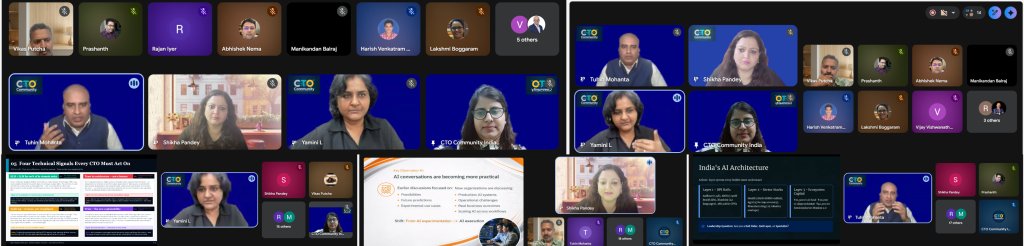
A sincere thanks to all the speakers and participants who made the discussion insightful and engaging.
🎙 Moderator Insights
Richa Kumari | CTO Community India Builder
The session opened by framing the goal of the discussion:
In an era where AI announcements are happening every week, leaders must move beyond hype and ask:
• What signals actually matter?
• What decisions should engineering leaders make in the next 12–24 months?
• How should organizations align their strategy with emerging AI ecosystems?
The discussion focused on Digital Public Infrastructure (DPI), AI governance, data readiness, and the future of agentic AI.
Speaker Highlights
Tuhin Mohanta
Tuhin shared a structured breakdown of the AI Impact Summit architecture and national strategy.
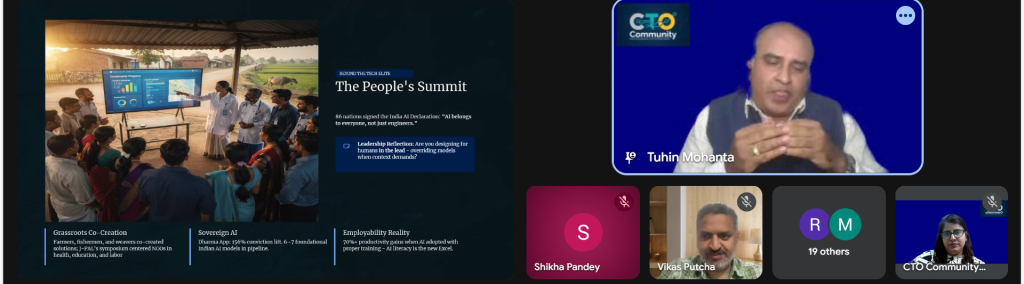
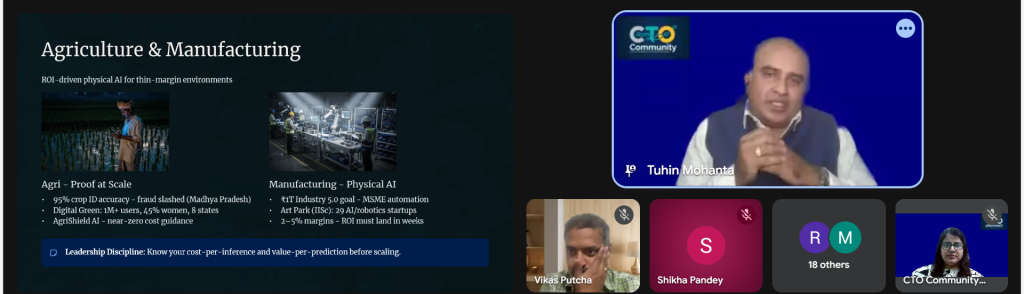
Key insights included:
1. Three Layers of Digital Public Infrastructure
- DPI Rails (Aadhaar, ABHA, Bhashini)
- Vertical Sector Stacks (Education, Agriculture, Healthcare)
- Ecosystem Capital (AI funds, semiconductor investments)
2. India’s Innovation Under Constraints
India is solving problems of scale, connectivity, and language diversity, creating globally exportable solutions.
3. Five Constraints Shaping AI Roadmaps
- Talent depth
- Compute sovereignty
- Legacy systems
- Language inclusion
- Regulatory ambiguity
4. Strategic Reflection for Leaders
Organizations must evaluate whether they are:
• Rail Riders (consuming DPI infrastructure)
• Rail Builders (building foundational platforms)
• Specialists (creating domain innovations)
This framework gives leaders a clear lens for strategic positioning.
Shikha Pandey
Shikha highlighted how the summit conversations have evolved beyond hype.
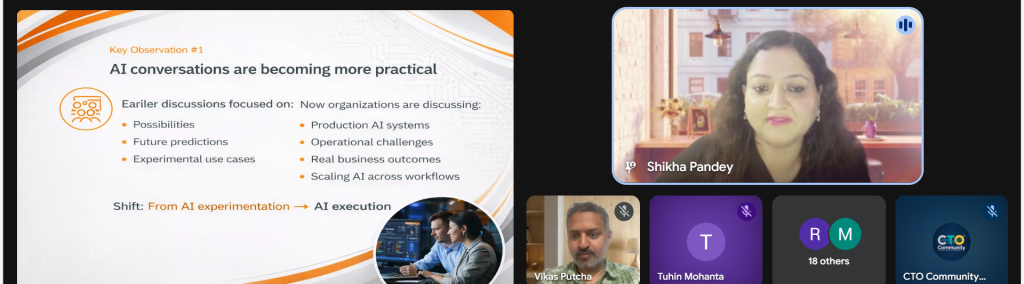
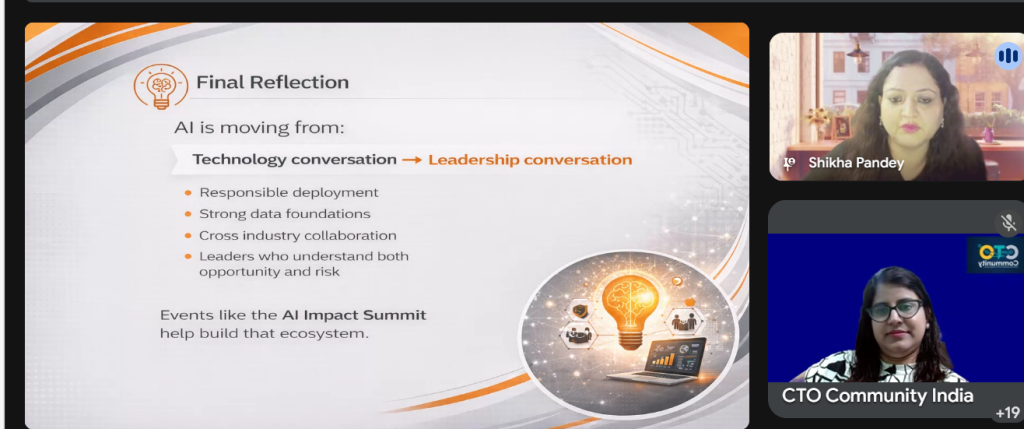
Key takeaways:
1. AI is Now a Societal Conversation
The summit brought together policymakers, startups, researchers, and enterprise leaders – showing AI is no longer just a tech topic.
2. Shift from Experimentation to Execution
Organizations are now asking practical questions:
• Where should AI create value?
• How can it scale across the organization?
• How do we measure ROI?
3. Data Readiness is the Biggest Challenge
Many enterprises struggle with:
• fragmented data
• poor integration across systems
• unclear data ownership
Without strong data governance, AI initiatives struggle to scale.
4.AI Leadership Requires Cross-Disciplinary Thinking
Successful leaders must understand:
• technology
• business outcomes
• governance and ethics
Yamini Lakshmipathy
Yamini shared perspectives from the summit on emerging AI architecture trends.
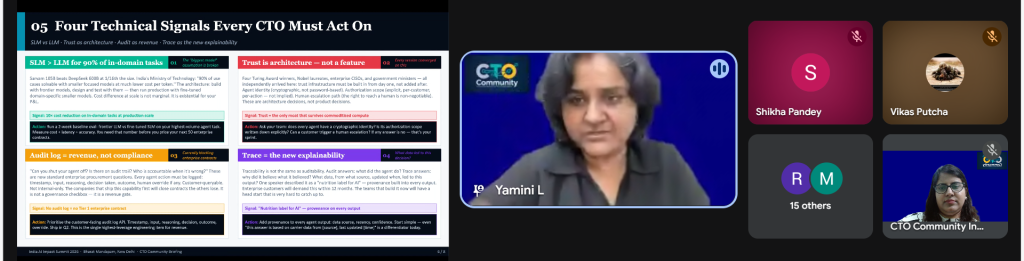
Key insights:
1. The Agentic AI Era Has Already Begun
Organizations are now exploring AI agents operating in production environments, which requires strong accountability frameworks.
2. Rise of Small Language Models
Evidence from startups shows SLMs outperforming large models for domain-specific tasks, offering better cost efficiency.
3. Trust Infrastructure is Critical
For agentic systems to work safely, organizations must implement:
• auditability
• traceability
• rollback mechanisms
• explainability of AI decisions
4. Sovereign AI is Becoming a Global Priority
Countries are focusing on data sovereignty, compute infrastructure, and local AI ecosystems.
Panel Discussion Themes
During the interactive discussion, several broader themes emerged:
🔹 Frugal AI Innovation
India’s approach focuses on building AI solutions under constraints rather than relying on massive compute spending.
🔹 Human-Centric AI Systems
AI systems must allow human override, governance, and accountability.
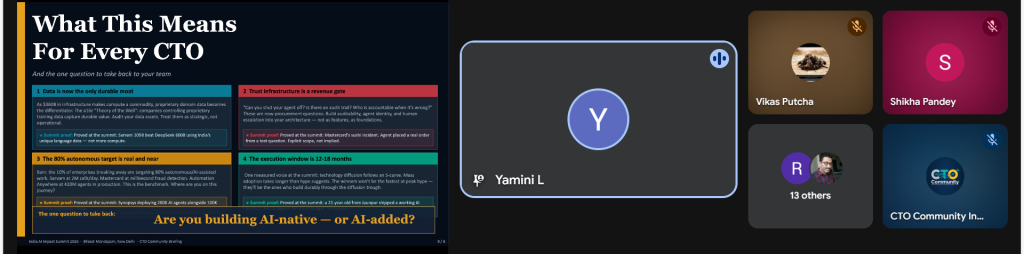
🔹 AI at the Core vs AI as an Add-on
Organizations must rethink whether they are simply adding AI features or designing products with AI at the foundation.
🔹 Data as the Real Competitive Moat
As models commoditize, proprietary data and insights become the true advantage.
Participant Perspectives
One of the most valuable aspects of the session was the engagement from our community participants.
Participants shared perspectives around:
• practical challenges in enterprise data readiness
• integrating AI into existing workflows
• managing AI governance and regulatory uncertainty
• balancing innovation with trust and accountability
These exchanges made the session not just a presentation — but a collaborative learning experience.
The AI Impact Summit demonstrated that AI is no longer only about models.
It is about systems, infrastructure, governance, and human collaboration.
Communities like CTO Community India play an important role in helping leaders:
• interpret signals
• connect ideas across industries
• translate inspiration into strategy
The real impact of a summit is not the announcements made on stage , it’s the conversations that follow.
As AI accelerates, leaders must move beyond hype and focus on interpreting signals, building responsible systems, and designing technology that truly serves people.
That is exactly the purpose of CTO Community India – turning insights into collective intelligence.