
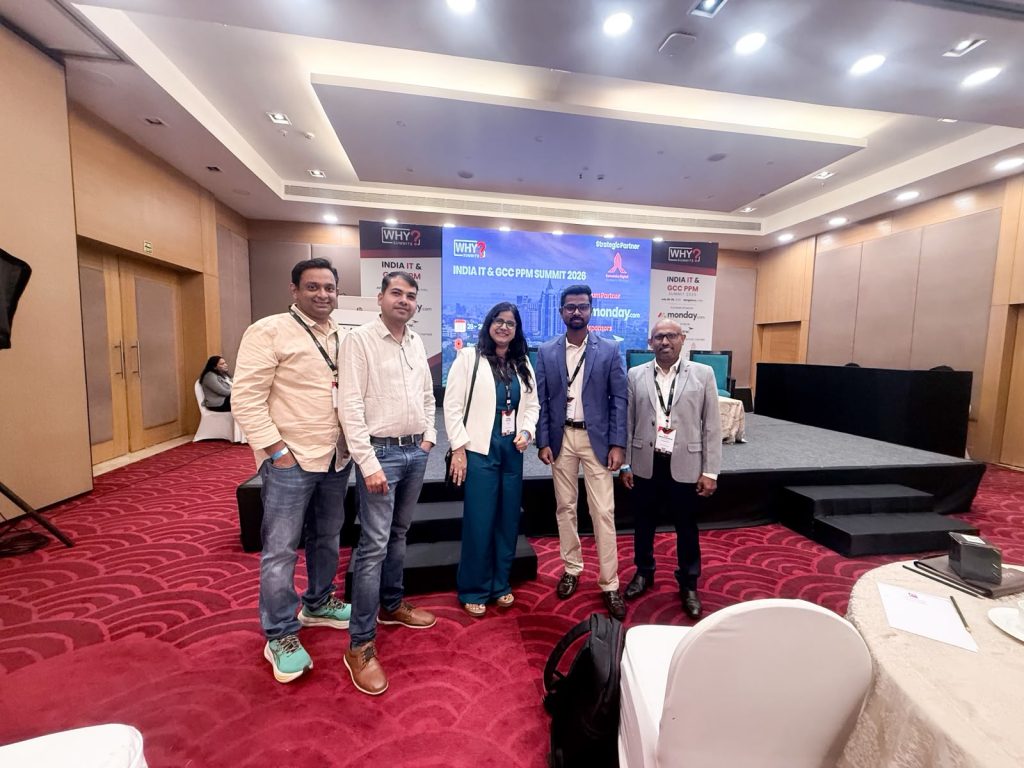
The India IT & GCC PPM Summit 2026 by Why Summits brought together technology leaders, CIOs, CTOs, GCC Heads, architects, and transformation leaders to discuss what the next decade of Enterprise IT, AI, Cybersecurity, and Global Capability Centers will look like.
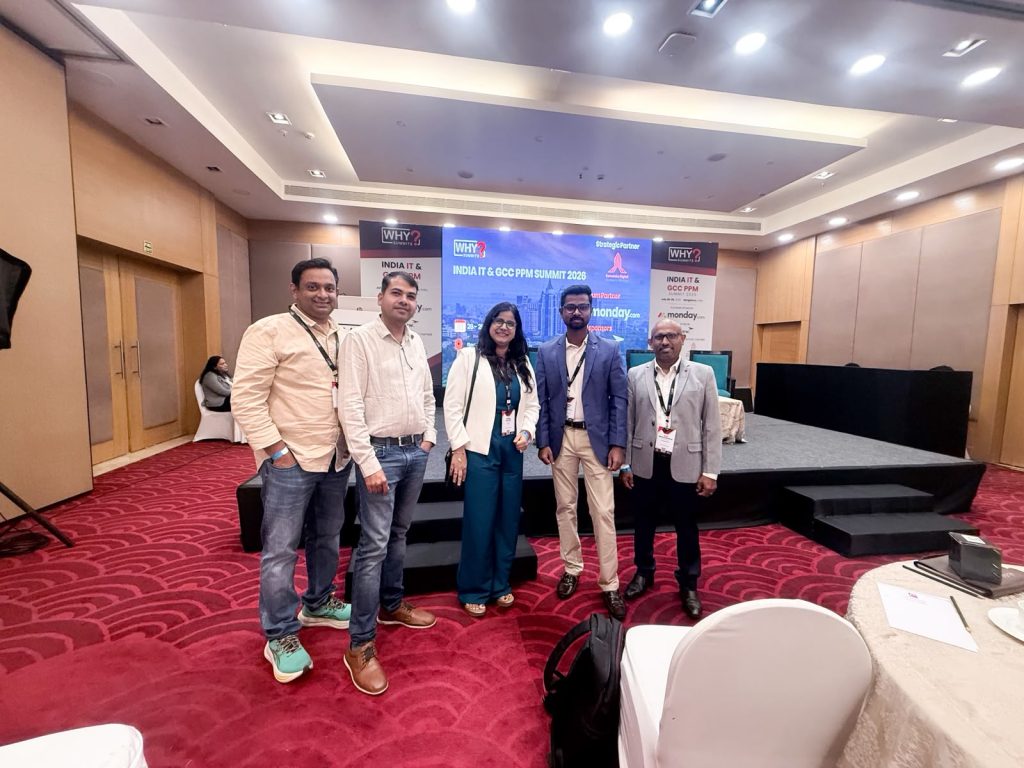
It was also wonderful to reconnect with a few members of the CTO Community and IIT Kanpur CTO Program. Conversations beyond the stage were just as insightful as the keynote sessions, reinforcing that some of the best learning happens through peer discussions and shared experiences.
Across the summit, there wasn’t one defining announcement. Instead, several conversations connected together to paint a bigger picture of where technology leadership is heading.
It was great reconnecting with a few members of the CTO Community—Srinivas Guni, Manish Jain, Sonu Gupta, and Keval Shah , Chnadrabushan Pandey, Richa kumari, Arun Ramachandran Beyond the sessions, exchanging ideas and experiences with fellow technology leaders made the summit even more enriching.
One discussion explored how Global Capability Centers (GCCs) are evolving.
For years, GCCs were measured by headcount, delivery, and cost optimization. That narrative is changing. Tomorrow’s GCCs will increasingly be measured by product ownership, engineering excellence, AI capability, innovation, and measurable business outcomes.
Another idea that stayed with me was:
Technology doesn’t fail. People, culture, and decision-making do.
Organizations continue investing in cloud, AI, and modern engineering practices. Yet transformation succeeds only when leadership, governance, operating models, and skills evolve alongside technology.
One particularly thought-provoking discussion focused on AI economics.
As technology leaders, we often ask:
“Can we build this with AI?”
Perhaps the better question is:
“Should we?”
The conversation extended beyond LLMs to token consumption, model selection, ROI, governance, enterprise data protection, and AI operating costs. Not every business problem needs the largest model. Sometimes the better solution is a domain-specific model, workflow automation, or a simpler architecture that delivers faster outcomes with lower cost.
Cybersecurity emerged as another major theme.
Security can no longer be the final checkpoint before production. It needs to become part of engineering from day one.
The discussions around Post-Quantum Cryptography (PQC) and Harvest Now, Decrypt Later (HNDL) highlighted why organizations should begin preparing today for tomorrow’s quantum threats. AI-driven security operations, Zero Trust architectures, and Secure-by-Design engineering are rapidly becoming business necessities rather than future aspirations.
Another engaging discussion centered on a question every engineering team has asked at some point:
Why does an application work perfectly in development but struggle during production deployment?
The answer wasn’t simply “bad code.”
The discussion pointed to environment inconsistencies, configuration drift, infrastructure dependencies, observability, governance, security validation, and years of accumulated architectural decisions.
Technical debt is no longer just a developer’s problem—it’s an enterprise challenge spanning architecture, engineering, operations, and leadership.
Reflections
A few ideas continued to resonate throughout the summit:
- GCCs are evolving from delivery organizations into strategic innovation partners.
- AI adoption must be driven by measurable business value—not technology hype.
- Security should be embedded by design, not added later.
- Technical debt is often organizational debt.
- Leadership, culture, and governance remain the biggest enablers of successful transformation.
One statement perhaps summarized the entire summit best:
Technology is not about what can be deployed. It is about the value it creates.
Many thanks to the organizers for creating such an insightful platform, and to the speakers and industry leaders—including Samir Venugopal, Chris Jordan, Soumya Datta, Parveen Kumar Motaparthi, Priyanka Arora, Aavishkar Bharara and many others—for sharing practical experiences and forward-looking perspectives.
Looking forward to seeing how these ideas translate into the next generation of AI-native, resilient, and business-driven enterprises.
#GCC #ArtificialIntelligence #CyberSecurity #PostQuantumCryptography #TechnicalDebt #EnterpriseArchitecture #TechnologyLeadership #DigitalTransformation #CTO #Innovation